Deutsche Wiedervereinigung: Staying connected
Erna Wiens’ memories of a divided Germany
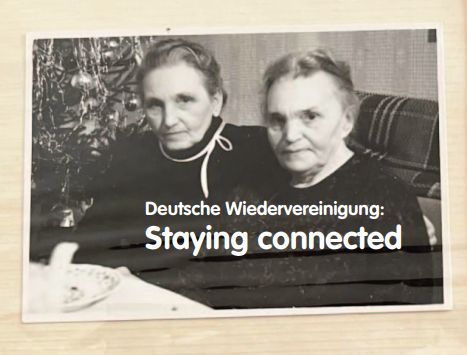
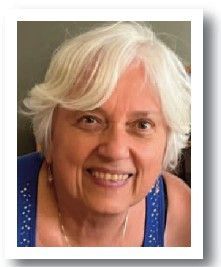
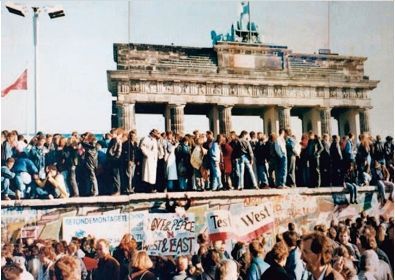
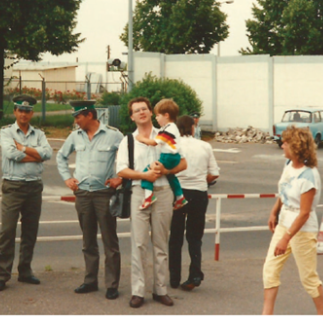
Those were times of missed family connections – families that were separated deliberately by dividing them during the Second World War which had its impacts. Along with other families from neighbouring villages, my grandmother Amalie Lang and most of her immediate family had been driven from their homes in Galicia. My mother’s immediate family home was in a small village of Falkenstein before being driven from their homes, which – by today’s borders – is about an hour outside Kiev, Ukraine. During the Second World War those borders changed continuously. My mother and her brother first received approval from the German Government to immigrate to Canada in 1951. A couple of years later, my grandparents moved to Winnipeg from West Germany where they had lived for some years after World War II. During the time the wall was up, I was a child living in my parent’s home in the West End of Winnipeg. I would have been about 10 years old when my grandmother and mother had been sending parcels each year: a large parcel of supplies to our family members in East Germany. It contained things like coffee, tea, some candy, the clothing that my siblings grew out of (for example leather coats), shoes, and new women’s hosiery. My mother and grandmother made one visit to West Germany and East Germany in 1965 that required a visa which took many months to obtain. This visa – initiated from Winnipeg – was to visit family in both West and East Germany. Crossing from Western to Eastern Germany had started to mean the crossing of national borders with different rules and regulations. In the early 1980’s, my husband and I also made a trip from Winnipeg to Hamburg where my husband’s brother and sister lived with their families. We did not require any visa to visit West Germany. We made arrangements through a “Reise Buero” in Hamburg to obtain a visitor/ tourist visa for East Germany for a three-day period, which allowed us to travel freely in East Germany. We were also required to stay at the pre-determined hotels for two nights in East Berlin and Potsdam – both in Eastern Germany. The two hotels were greatly different in quality but had cost the same, approximately $200.00 a night. In East Germany, we had difficulty getting gas for my husband‘s brother’s West German car. The gas station attendants feared being questioned, receiving West German money from us to pay for the gas. East Germany then “was a different world.” We had to convert West German Deutsche Mark to East German Marks, which we had difficulty spending as goods available were of poor quality. I do remember spending our East German money on a child’s Lederhosen, bringing that back for our friends’ first born son in Canada. At the end of this trip to East Germany, we left a suitcase of goods with my grandmother’s sister Tante Tilla, (Matilda). She had no idea we would stop at her home and drop a suitcase full of clothes, some chocolates and coffee. She was frightened at who might notice in her neighborhood that a West German car was parked in her farmyard. As we entered her home, she requested that the suitcase be taken up the ladder and left in the attic for safe keeping and its contents be distributed amongst family members. My grandmother’s sister’s family went through many inequalities during those years. East Germans were restricted from traveling out of East Germany. Stringent passport checks were conducted by Eastern German border guards. Leaving East Germany back to West Germany, we had to exit through the same border crossing, and exit visas were required upon leaving. That visit was a rude awakening for my husband and I. We saw burnt out churches, old dilapidated buildings that were once beautiful and grand country homes that were not repaired or painted. Parts of East Germany, by all intents and purposes, felt abandoned. East Germany had become impoverished during the Cold War. Movement in East Germany was full of restrictions, which also prohibited photo taking. There was such a long list of places where you could not take pictures, that very few pictures existed in our family albums from that visit. During this visit to East Germany we did not take pictures, and during our stay in East Berlin at a very Grand Hotel, we were being watched, our vehicle was checked, and our passports were kept over night with the hotel administration until the next morning. Once we were back in West Germany, we felt a sense of relief, a sense of hope, and freedom to move around. The coming down of “The Wall” changed the world of socialism, currency, and the movement of goods which then could freely move beyond the former inner-German borders.